

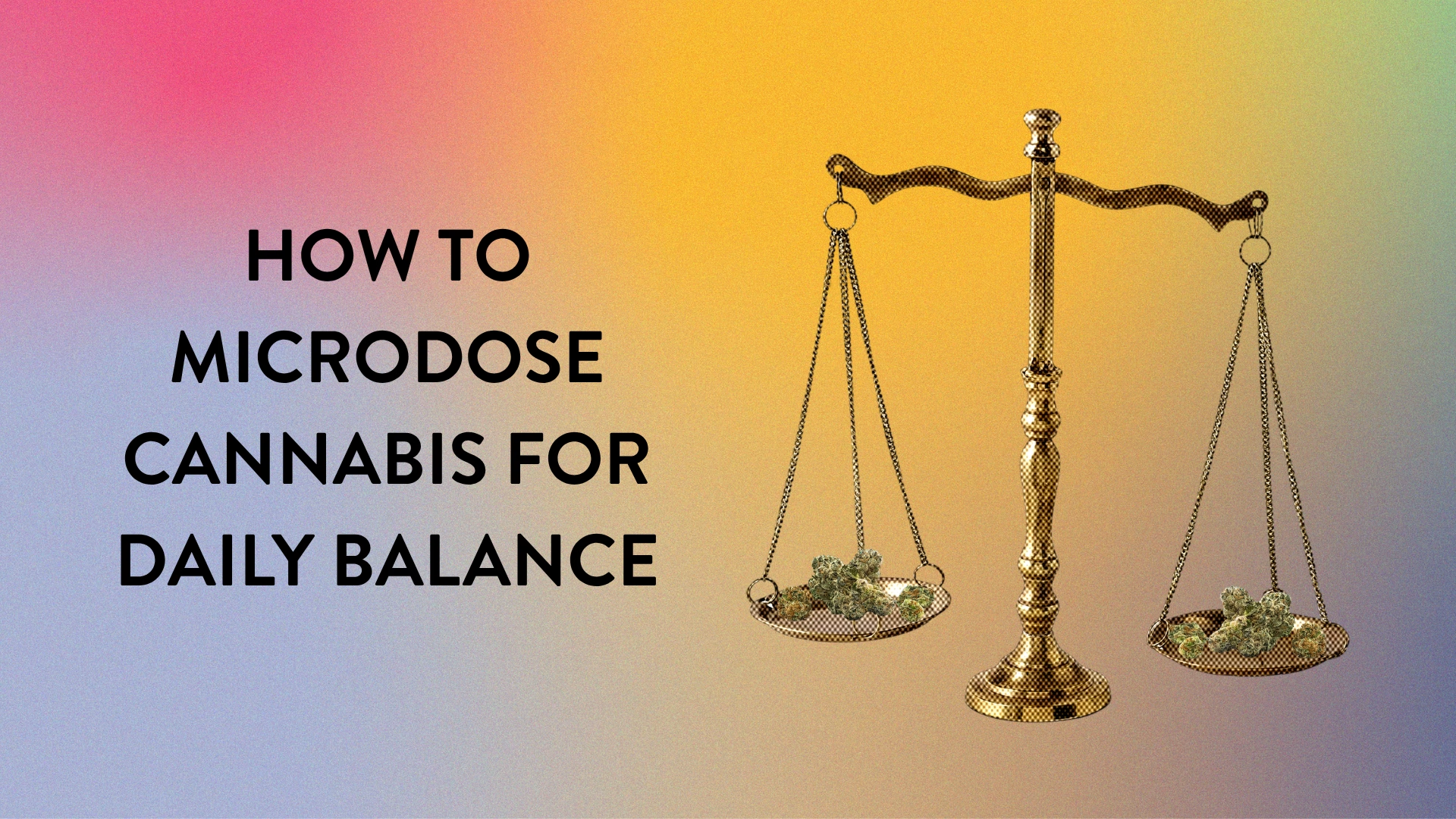
A dose small enough to disappear into your day is often the one that works best, and that single idea explains why microdosing has become one of the fastest-growing habits in cannabis.
One clinical study found that a moderate dose of THC reduced stress during a demanding task, while a higher dose made mood worse instead of better. That kind of result matters, because it means more THC isn’t automatically better THC. It also explains why so many people are searching for how to microdose cannabis instead of just reaching for whatever’s on the shelf.
This guide walks through what a microdose actually is, why the amount matters so much, and how to build the practice into a routine you can rely on without losing a Tuesday afternoon to the couch.
What Microdosing Cannabis Actually Means
Microdosing is the practice of taking a small, sub-perceptual amount of THC, usually somewhere between 1 and 5 milligrams, to get a functional benefit without feeling intoxicated. The goal isn’t to feel just enough of a shift in mood, focus, or tension that you notice something changed, while still being able to answer emails, hold a conversation, or drive later that afternoon.
This is different from how most people first learn to use cannabis. A standard edible often contains 10 milligrams of THC or more, which is enough to produce a clear high for most consumers. Learning how to microdose cannabis means working well below that line, in territory where the effects are subtle rather than sweeping.
The concept isn’t new. Microdosing was popularized first with substances like psilocybin, where people took tiny fractions of a typical dose to support mood and focus without any hallucinogenic effect. Cannabis users borrowed the same logic. Instead of asking how high you want to get, the question becomes how little you can take and still get the result you’re after.
How Much Cannabis Is a Microdose?
This is the question almost everyone asks first, and the honest answer is that it depends on your body, but there’s a useful range to start from. Most guidance places a cannabis microdose between 1 and 5 milligrams of THC, with many beginners finding their sweet spot closer to 1 to 2.5 milligrams.
Compare that to a standard recreational edible, which is often built around 10 milligrams as the baseline dose meant to produce a noticeable high. A microdose sits at a fraction of that amount. Same compound, dramatically smaller quantity, and a completely different goal. You’re not chasing intoxication. You’re chasing what researchers sometimes call your threshold dose, the smallest amount that produces a real, felt effect without tipping into impairment.
Body weight, metabolism, tolerance, and whether you’ve eaten recently all shift where that threshold sits for you personally. A new consumer usually needs less than someone with a longer history of use. That’s one reason a single fixed number never quite works as universal advice, and why tracking your own response matters more than following someone else’s exact milligram count.
The Science Behind a Threshold Dose
THC interacts with the endocannabinoid system, which helps regulate mood, sleep, appetite, and pain. At lower doses, THC may produce subtler effects, while higher doses are more likely to trigger unwanted effects such as anxiety or cognitive impairment.
This is why the biphasic effect matters. Cannabis does not always produce a simple “more THC, more of the same effect” pattern; in some studies, lower and higher doses produce different, sometimes opposite, outcomes. That supports a “start low and go slow” approach rather than assuming stronger is better.
Tolerance can also develop with repeated use, so the same dose may feel less effective over time. For that reason, some people use breaks or reduce frequency, although the best break schedule is not firmly established by evidence.
CBD may modify THC’s effects, and balanced THC:CBD ratios such as 1:1 or 2:1 are often described as less intoxicating than THC-dominant products. Still, the effect depends on the product, the dose, and the individual.
Cannabis Microdosing Benefits Worth Knowing About
The appeal of microdosing is functional. People report a handful of specific outcomes, and while the research is still developing in many areas, some benefits have more evidence behind them than others.
Reduced anxiety and stress show up constantly in this conversation, and cannabis microdosing anxiety relief is one of the most searched benefits for good reason. A low dose of THC appears to ease tension without the sedation or racing thoughts that sometimes come with a bigger dose. That said, response varies a lot from person to person, and some people find that any THC increases anxious feelings rather than easing them, so this is an area where starting low really matters.
Focus and creativity come up often too. A small daytime dose is frequently described as supporting a clear-headed lift, the kind that helps someone settle into a flow state on a task without the heaviness of a bigger high. This is part of why microdosing cannabis for productivity has become such a common search, especially among people balancing work and other responsibilities who don’t have room in their day for real impairment.
If you’re after a bigger, more social lift instead of a subtle one, our guide to strains that make you laugh covers the euphoric, giggly end of the spectrum.
Sleep support and mild pain relief round out the most commonly reported low-dose THC benefits. Some research suggests lower doses may help people fall asleep a little faster, though study quality in this area is still mixed, and the honest takeaway is that a small dose might help without any guarantee.
How to Microdose Cannabis Step by Step
Once you understand the reasoning, the actual practice of how to microdose cannabis comes down to a short, repeatable process.
Choose Your Product First
Start by picking a format that makes precise dosing easy. Low-dose edibles, tinctures, pills, mints, and capsules built around 1 to 5 milligrams are generally easier to work with than flower or vapes, since inhaled methods are harder to measure consistently. A tincture with a dropper lets you make small, exact adjustments, while a pre-measured capsule removes guesswork entirely.
Microdose Edibles vs Flower
This comparison comes up constantly, and the honest answer is that both can work, just differently. Traditional edibles take longer to kick in, often one to two hours, but the effect tends to last four to eight hours once it arrives. That slower onset means patience is essential, since redosing too early is the most common mistake beginners make.
Fast-acting edibles have narrowed that gap somewhat. Using nanoemulsion or other absorption technology, these products can start working in as little as 15 to 30 minutes, which makes the waiting game a lot less brutal for anyone impatient by nature. The effects still don’t hit as instantly as inhalation, and the duration is shorter than a traditional edible too, but for a lot of people, that faster onset makes it easier to gauge a microdose without the two-hour guessing period.
Flower and other inhaled methods hit within minutes and fade within two to three hours, which makes them easier to adjust in real time but harder to measure with any real precision. If you’re just starting out, a fast-acting edible or a tincture with clear milligram labeling tends to be the more forgiving choice, since you get a faster read on your dose without giving up the accuracy that inhaled methods struggle to offer.
Track, Wait, Adjust
Start at the low end of the range, somewhere around 1 to 2.5 milligrams, and give that dose a full, fair test before judging it. Wait out the entire onset window, up to two hours for something ingested, before deciding whether to take more. Keep a short log of the dose, the time, and how you felt, since patterns that aren’t obvious after one try usually become clear after a week or two. When you do adjust, move by about a milligram at a time and change only one variable, whether that’s the amount, the timing, or the product itself. Changing everything at once makes it impossible to know what actually worked.
Microdosing Cannabis for Productivity and Creativity
A lot of people come to this practice specifically because they want to stay functional. Microdosing THC daily, taken in a small, consistent dose earlier in the day, is often described as supporting mental clarity rather than dulling it, which is a very different experience from a traditional high.
The key here is timing and dose size working together. A daytime microdose aimed at focus tends to sit lower on the range than an evening dose meant for relaxation, and taking it too late or too large can undo the exact clarity you were hoping for.
Someone using cannabis to support a creative project, for example, might find that 1 to 2 milligrams in the late morning helps ideas flow more easily, while the same person taking 8 or 10 milligrams would likely end up distracted instead of inspired.
Cannabis Microdosing and Anxiety
Anxiety deserves its own section because the relationship between cannabis and anxiety isn’t simple. In small amounts, THC can ease everyday stress and social tension for a lot of people. In larger amounts, that same compound frequently increases anxious feelings instead. This is the biphasic effect showing up again, and it’s exactly why cannabis microdosing anxiety management works best when the dose stays firmly on the low end. Pairing a small dose with a calming terpene profile, like linalool or limonene, can reinforce the effect — see our breakdown of terpenes and mood for more on how that works.
If you’re using cannabis specifically to manage anxiety, starting even lower than the standard range, closer to 1 milligram, is a reasonable and often smarter choice. Pay attention to how you feel in the first hour rather than assuming more will help faster. And if you’re on medication or managing a diagnosed condition, it’s worth talking to a healthcare provider before building cannabis into that part of your routine.
Building It Into a Daily Wellness Routine
Cannabis and daily wellness routines tend to work best when the dose stays boring and predictable rather than exciting. That might sound like an odd goal, but it’s really the whole point. A microdose that surprises you wasn’t measured carefully enough.
Consistency matters here more than almost anything else. Some people take the same small dose at the same time each day, while others follow a day-on, day-off rhythm to keep tolerance from creeping upward. Either approach can work, but the constant is tracking what you take and how it feels, since that log is what turns a guess into a routine you can actually trust.
If you’re building this into your week, ask a budtender at Nightjar about low-dose edibles, tinctures, or 1:1 CBD:THC products designed specifically for this kind of consistent, functional use. Products made for microdosing take a lot of the guesswork out of an approach that depends entirely on precision.
FAQ
What does it mean to microdose cannabis?
Microdosing means taking a small, sub-intoxicating amount of THC, often around 1 to 5 milligrams, to try to get subtle functional effects without feeling clearly high or impaired.
How much THC is a microdose?
Most guidance places a microdose between 1 and 5 milligrams of THC, with many beginners starting closer to 1 to 2.5 milligrams. That is well below the 10 milligram dose often considered a standard edible serving.
What are the benefits of microdosing cannabis?
People often report benefits such as reduced stress, a lighter mood, better focus, mild pain relief, and sometimes better sleep. The evidence varies by outcome, and individual responses can differ quite a bit.
Can you microdose cannabis every day?
Daily use is common, but tolerance can build over time so that the same dose may feel less effective after a few weeks. Some people take occasional breaks to help keep their dose from slowly creeping upward.
Is microdosing cannabis good for anxiety?
It can be for some people. A low dose of THC may ease tension without the heavier effects of a larger dose, while higher doses can sometimes increase anxiety instead. Starting low and watching your own response matters a lot here.
What products are best for microdosing?
Low-dose edibles, tinctures, and capsules built around 1 to 5 milligrams are often the easiest to dose precisely. Products with a defined CBD:THC ratio may also feel smoother or more predictable for some users.
How do you know if you’re microdosing correctly?
You are probably in the right range if you notice a mild shift in mood, focus, or tension but still feel normally functional. If you feel foggy, overly sedated, or distracted, the dose was likely too high.
Does microdosing cannabis affect tolerance?
Yes. Even small daily doses can build tolerance over time, which may make the same amount feel less noticeable. Tracking your response and taking occasional breaks can help keep your baseline dose stable.
What is the difference between microdosing THC and CBD?
THC is psychoactive even at low doses and is what most people are using for mood, focus, or relaxation effects. CBD is not intoxicating and is often used on its own or paired with THC to soften its effects.
